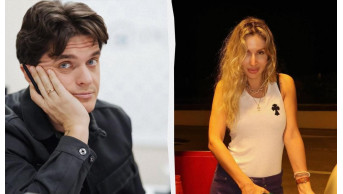
Anatoliy Anatolich Defends Loboda's Language Choice Amidst Rising Tensions

In an era where language increasingly aligns with identity and politics, Ukrainian host and blogger Anatoliy Anatolich has stirred the pot with his recent comments on linguistic authenticity. The notable media figure sparked discussions after defending his godmother, the singer Svitlana Loboda, who continues to perform in Russian abroad, despite having severed ties with Russia.
A Bold Stand for Ukrainian Language
Anatolich took to Instagram to articulate his stance on the importance of the Ukrainian language in both private and public life. With rising concerns about the resurgence of Russian, he expressed a personal desire to insulate his children from its influence, advocating instead for English and French as alternatives.
"In 2022, almost everyone switched to Ukrainian. It is our identifier. Now, I hear more and more Russian again. I don't want my kids speaking this language, " Anatolich declared, urging for a renewed defense of Ukrainian.
Defending Loboda's Linguistic Choice
Fans quickly pointed out the apparent contradiction regarding Loboda, who has publicly cut ties with Russia yet maintains a Russian-speaking repertoire in her international performances. Anatolich was quick to respond, emphasizing the personal and market-driven nature of Loboda's choice.
"Should I show you our correspondence in Ukrainian? She lives abroad, and it's her decision what language she sings in, " he explained, underscoring that her performances take place outside Russia, targeting regions like Kazakhstan and the Baltics.
The Broader Implications
This dialogue taps into broader issues of cultural identity and preservation amidst political turmoil. As the conversation on language and identity intensifies, Anatolich's comments reflect a larger movement within Ukraine to reclaim and amplify its cultural heritage. While some see Loboda's linguistic choices as a nod to practicality, others view them as a moment of dissonance in an otherwise unified national effort.
In conclusion, the discourse around language in Ukraine remains a multifaceted dilemma, balancing between personal freedom and national allegiance. This ongoing debate signals a critical juncture in the country's cultural evolution, one that could shape its identity for generations to come.
Editor: Yana Davydiuk