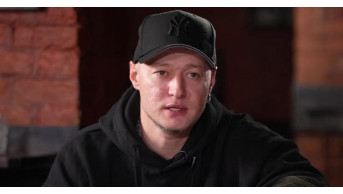
Andriy Khlyvniuk's Bold Stand: Language as a Shield

In a world constantly reshaped by conflict and identity, Andriy Khlyvniuk, the frontman of the renowned Ukrainian band "Boombox, " takes a resolute stance on the power of language. Now serving in the Ukrainian Armed Forces, Khlyvniuk has made a poignant declaration: the significance of expelling the Russian language from Ukrainian territory is paramount.
A Personal Transformation on the Frontlines
The atrocities witnessed on the battlefield have profoundly impacted Khlyvniuk. He articulates a deep-seated discomfort when surrounded by the Russian language, reflecting on its association with oppression and conflict. "Language is more than communication, " he emphasizes, "it's a pillar of Ukrainian identity."
"After witnessing horrors, a protest barrier stands so firm that I simply cannot accept it. A person reacts strongly to what is familiar and what is foreign during hard times."
Language as a Cultural Armor
Khlyvniuk's insights delve into the heart of identity politics. For him, language is a critical trigger that determines friend from foe. He describes the Russian language as forever hostile, a marker of foreign presence and aggression.
The Dilemma of "Good Russians"
Khlyvniuk's view extends beyond just language. He questions the notion of "good Russians." For Khlyvniuk, anything associated with Russia is irrevocably linked to its oppressive regime. He finds it challenging to make exceptions, even for those Russians who oppose their government's actions.
"The fight continues. Proving that someone is a dissident or an artist who donates to the armed forces cannot erase the trigger!"
The Personal and the Political
Recently, Khlyvniuk opened up about personal changes, revealing his divorce for the first time. This personal upheaval echoes his broader struggle against the forces that threaten Ukraine's cultural fabric.
In the end, Khlyvniuk's stance is not merely about language but about preserving a nation's soul. His conviction serves as a rallying cry for those who see language as a shield against cultural erasure.
Editor: Emiliia Morozova