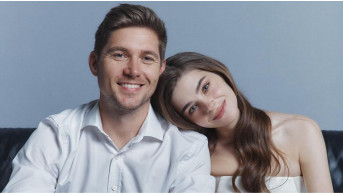
Kateryna Ostapchuk vs. TikTok discussions: Why we shouldn't be afraid of children's smiles

Kateryna Ostapchuk against TikTok discussions: Why we should not be afraid of children's smiles
Kateryna Ostapchuk, the third wife of the famous showman Volodymyr Ostapchuk, once again attracted the attention of the public with her thoughts. This time, she raised a topic that is actively discussed in TikTok - the attitude towards children in public space.
The video on TikTok that provoked a discussion
According to Kateryna, she came across a video on TikTok, where one of the mothers spoke very emotionally against the fact that adults smile at children, wave at them and start a conversation. The woman considered it a violation of personal boundaries.
Strongly disagree with the position
Kateryna Ostapchuk could not stay away. In her stories on Instagram, she strongly spoke out against such an opinion. The blogger noted that she herself often smiles at children and sees nothing wrong with it.
"You can't touch someone else's child without permission, of course. But just wave... I'm afraid of people, really. Soon they will attack you because you smile, because it violates other people's personal boundaries."
Different perspectives: no negative experience
It is interesting that Kateryna has never faced a negative reaction from mothers to her smiles or gestures. This raises the question of whether such a problem is more theoretical than real.
Personal context and future plans
It is worth noting that Kateryna and Volodymyr do not yet have children together, but the TV presenter is already the father of a son and a daughter from his first marriage. The children live in Canada with his ex-wife Olena Voychenko. He had no children in his second marriage with lawyer Khrystyna Hornyak.
What does this mean for society?
The discussion raised by Kateryna Ostapchuk is part of a larger conversation about limits and personal boundaries in society. Her strong stance may encourage others to think about how we interact with each other in public spaces. She reminds us that good intentions and smiles can be helpful, not threatening.
Editor: Emiliia Morozova