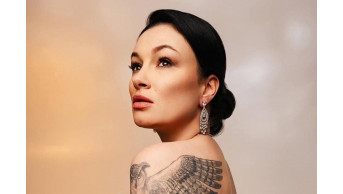
Anastasia Prikhodko's Bold Defense of Russian Language Sparks Debate

In a striking move that has set tongues wagging across Ukraine, renowned singer Anastasia Prikhodko has come forward to publicly defend the Russian language. The singer, known for her powerful voice and strong opinions, gave an interview in Russian, stirring a heated debate on linguistic identity in a nation grappling with ongoing conflict.
A Controversial Stance: Defending Linguistic Choice
Prikhodko's interview comes at a time when language is as much a battlefield as any other in Ukraine. Her defense of speaking Russian, even as the language of a nation at odds with Ukraine, has caused a stir. "I believe every citizen should know Ukrainian, but speaking is a personal choice, " she insisted, adding that raising the language issue divides rather than unites.
Linguistic Legacy and Personal History
Prikhodko, who was educated in a Russian-speaking school, claims her lack of early exposure to Ukrainian is not her fault. "I'm not to blame for being taught in Russian, " she explained, underscoring a historical context that many share. For those like her, the transition to Ukrainian is not straightforward. Her comments reflect the struggles of many Ukrainians, highlighting a cultural and educational legacy that complicates national identity.
Language, Identity, and National Unity
Yet, Prikhodko emphasizes that having a Ukrainian passport is what makes one Ukrainian, irrespective of the language spoken. She rejects the notion that language dictates nationality. Her words resonate with those from regions like Kurakhove and Kupiansk, where Russian prevails, and suggest a plea for unity over division. "We must extend a helping hand, not ridicule or force, " she urged.
The Broader Implications of a Divisive Issue
The singer's remarks invite reflection on the broader implications of language in national cohesion. Her assertion that language tensions only arose post-2014 serves as a reminder of the complex interplay between culture and politics. As Ukraine continues to navigate its path, the discourse on language remains a potent symbol of its evolving identity.
Editor: Emiliia Morozova