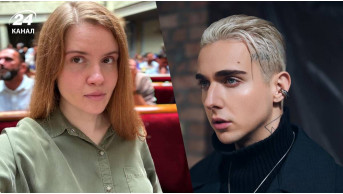
Melovin's Bold Response to MP: A Call for Understanding

In a world where the lines between personal identity and societal norms are constantly being challenged, recent comments by Ukrainian MP Mariyana Bezugla have stirred significant public discourse. Bezugla took to social media to express her views on the LGBTQ+ community, labeling it as a "psychophysiological deviation" and comparing it to conditions like obesity and psoriasis.
The Controversial Statement
Bezugla's words have sparked a heated debate, bringing to the fore the complexities of identity, science, and social acceptance. She argued that while she does not oppose individuals from the LGBTQ+ community, she believes their state is a deviation from what she considers the norm. Bezugla drew parallels between being gay and having conditions such as psoriasis or allergies, suggesting that these aspects of identity can impose both physical and social limitations.
"One might be born gay, have psoriasis, or an allergy to penicillin—these are life-long states requiring management, " Bezugla said, advocating for a life of full potential irrespective of one's identity.
Melovin's Sharp Rebuttal
In response, Ukrainian singer Melovin, who publicly came out as part of the LGBTQ+ community, did not hold back. He humorously suggested that MPs should undergo mental health assessments before election, questioning Bezugla's cognitive understanding of the matter.
"It's like having borscht and cabbage soup on one plate, with a fly in the compote for dessert, " Melovin quipped, highlighting the confusion in Bezugla's comparisons.
Melovin emphasized the importance of critical thinking in such discussions and pointed out that equating sexual orientation with medical conditions is a test of societal ignorance.
The Broader Implications
This public exchange has ignited a broader dialogue about acceptance, discrimination, and the evolution of social norms. It serves as a reminder of the ongoing struggle for recognition and equal treatment faced by the LGBTQ+ community.
As the debate continues, the emphasis on empathy and understanding remains crucial. The world is watching how Ukraine navigates these complex social dynamics, potentially setting precedents for future discussions on identity and acceptance.
Editor: Yana Davydiuk