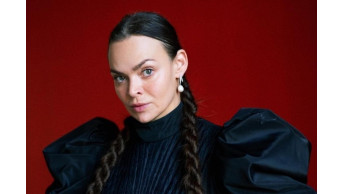
Tatiana Mikhina's Emotional Struggle: Searching for a Sister Amidst Conflict

In the heart of turmoil, actress Tatiana Mikhina stands resilient, yet deeply troubled. The acclaimed Ukrainian theatre and film actress, known for her roles in the Kyiv Franko Theatre's "Caligula, " "Macbeth, " and "Tartuffe, " found herself facing an emotional battle far from the stage. Her beloved sister from Mariupol has gone missing, and Mikhina is left with more questions than answers.
The Pain of Uncertainty
Hailing from the once-vibrant city of Mariupol, Tatiana Mikhina has seen her world turned upside down. "I was born in Mariupol, where my childhood memories are etched. Now, the maps show a red blotch where my home once stood, " she shared, her voice heavy with nostalgia and grief. The artist has lived in Kyiv for over two decades, but the ties to her roots remain unbroken, even as her family has been scattered far and wide, with many now finding refuge in Norway.
The Enigma of Disappearance
In the chaos of conflict, Mikhina's sister resided in an area relentlessly bombarded, a place now cloaked in mystery and silence. "She lived in a district hit hard by early shelling. She hasn't been in touch for a long time, " Mikhina confides, highlighting the harrowing uncertainty that haunts her daily.
A Community Uprooted
Once a thriving community, Mariupol now presents a stark contrast to its past. Mikhina's close connections in the city have vanished, with buildings reduced to rubble and strangers occupying familiar spaces. "People no longer live in Mariupol. I tried reaching out, only to find strangers using their phones, " Mikhina recounts, painting a picture of a city where even the simplest connections have been severed and replaced by new, unsettling realities.
Seeking Solace and Closure
The actress's story is one of resilience and a search for closure amid chaos. While her career on stage continues to flourish, Mikhina's personal life remains a testament to the enduring strength of family ties, even when faced with the harshest trials. Her experience serves as a poignant reminder of the impact of conflict on individual lives and the relentless struggle to hope against hope.
Editor: Emiliia Morozova