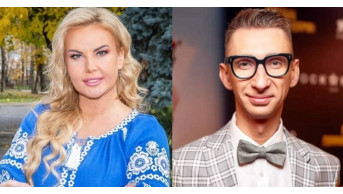
V'yacheslav Solomka's Bold Move: No Hard Feelings with Kamaliya Despite Criticism

In the world of glamour and glitz, where every word is weighed and every glance scrutinized, Ukrainian host V'yacheslav Solomka made waves at the YUNA-2025 awards ceremony. Known for his sharp tongue, Solomka recently sparked controversy with his candid remarks about singer Kamaliya's artistry.
A Public Tiff or Professional Critique?
Solomka's comments, which some perceived as a personal attack, have been the talk of the town. However, the host is adamant that his words were purely a professional critique.
"When asked, I simply requested people to name one of her songs, " Solomka explained, emphasizing his intent was not to insult but to express an opinion. "Kamaliya is a good person, " he added, highlighting the distinction between personal and professional disagreements.
Rediscovering Common Ground at YUNA-2025
Despite previous tensions, Solomka's presence at YUNA-2025, partially organized by Kamaliya, signals a warming of relations. Solomka shared insights into his approach to criticism, underscoring a mature stance. "When someone critiques my work, I ask why they feel that way, " he noted. "Evaluation of art is very subjective."
From Conflict to Collaboration?
This event might mark a new chapter in Solomka and Kamaliya’s professional dynamics. With Kamaliya's former husband, Mohammad Zahoor, having a hand in the ceremony's organization, the stage was set for reconciliation rather than rivalry. Solomka’s appearance could be a sign of professionalism trumping past misunderstandings.
Lessons in Criticism: Art and Objectivity
Solomka’s perspective sheds light on the broader conversation about artistic critique. His experience serves as a reminder that art is subjective and that criticism, when constructive, can be a powerful tool for growth.
In the ever-evolving world of entertainment, Solomka’s story is a testament to the importance of keeping personal and professional boundaries intact. This narrative is not just about a single event but a reflection on how public figures navigate the often murky waters of fame, critique, and collaboration.
Editor: Yana Davydiuk